
Lee esta entrada en español
This year marks the 50th anniversary of the Mareva injunction, a landmark remedy in the common law tradition.
Essentially, it is a court order that prohibits the defendant from disposing of their assets during proceedings—preventing them from hiding or transferring them out of the jurisdiction before a judgment is rendered.
In simple terms, it’s a way to freeze the defendant’s assets to ensure there’s something to enforce against if the claimant wins.
Also known today as a freezing order, the Mareva injunction revolutionized English law in 1975 and its impact has since spread far beyond the UK.
Historical Origins in the UK
Until the mid-1970s, English courts lacked a tool equivalent to civil law’s asset freezing remedies. Creditors could not secure assets ahead of judgment. That changed in 1975, with two key cases:
- Nippon Yusen Kaisha v. Karageorgis (May 1975):
- A Japanese shipping company sought to freeze funds in a London bank account.
- Initially refused due to lack of precedent, the order was later granted by Lord Denning, invoking a general statutory provision allowing injunctions where “just and convenient.” He reasoned that the law needed to evolve to prevent injustice.
- Mareva Compania Naviera SA v. International Bulkcarriers SA (June 1975):
- Only weeks later, a similar case came before the courts.
- Again, Lord Denning granted the injunction—this time ex parte—establishing the precedent.
- The remedy was quickly dubbed a “Mareva injunction” in reference to this case.
Lord Denning called it “the greatest piece of judicial law reform in my time.” For the first time, English courts could secure assets before trial—like France’s saisie conservatoire or Spain’s embargo preventivo. Later reforms, including the 1998 Civil Procedure Rules, officially renamed it “Freezing Order.”
What is a Mareva Injunction and How Does It Work?

A Mareva injunction is an equitable, in personam remedy: it binds the defendant and forbids asset transfers under threat of contempt of court. Unlike traditional asset seizures (which operate in rem), the Mareva order focuses on personal compliance.
Although technically addressed only to the defendant, courts often alert third parties—such as banks—to ensure practical enforcement.
To obtain a Mareva injunction, the claimant must demonstrate:
- A good arguable case on the merits;
- A real risk that the defendant will dissipate assets;
- Full and frank disclosure (especially in ex parte applications);
- An undertaking in damages, in case the injunction is later deemed unjustified.
This remedy is powerful and intrusive. When paired with disclosure orders (forcing the defendant to reveal their assets) and Anton Piller orders (evidence preservation searches), it becomes a procedural “nuclear weapon.”
To prevent abuse, courts permit exceptions (e.g., for living or business expenses) and may exempt low-value assets to preserve liquidity.
Evolution and Reach in the Common Law World

After 1975, the Mareva injunction quickly gained traction in the United Kingdom and other common law countries.
British courts extended its reach throughout the 1980s and 1990s, ultimately allowing worldwide freezing orders that could apply to the defendant’s assets regardless of location.
These global orders have a distinctive extraterritorial nature: the English court instructs the defendant not to dispose of assets anywhere in the world, relying on the defendant’s voluntary compliance (under threat of sanctions for contempt) and the cooperation of foreign courts to enforce the order when necessary.
For instance, the High Court in London may freeze a defendant’s bank accounts not only in England, but also funds in Switzerland or properties in Spain, provided there is evidence of risk of dissipation.
Naturally, this raises challenges of cross-border legal cooperation, but worldwide freezing orders have become a powerful tool in international fraud and commercial litigation, ensuring that debtors cannot vanish with the money.
Today, the Mareva injunction — now commonly referred to as a freezing order — is a widely recognized remedy across the common law world.
Countries such as Canada, Australia, Singapore, and Nigeria have adopted similar orders in their own civil procedures.
It is now standard practice for lawyers in common law jurisdictions to request a freezing order when they fear the defendant might dissipate the assets before judgment.
Thanks to five decades of judicial practice, detailed protocols have developed on how to apply for a Mareva properly — including the duty of full and frank disclosure — and on how to calibrate the order to be effective yet proportionate.
Its use has even been codified in legislation: since 1998, the Civil Procedure Rules in England formally recognize it under the name freezing order, with practical guidance available to courts and practitioners alike.
It is worth noting that this English innovation was actually inspired by interim measures long established in civil law jurisdictions.
As Lord Denning remarked in 1975, many countries had long allowed pre-judgment asset freezes — citing, for example, the French saisie conservatoire — while England had fallen behind for more than a century.
The Mareva injunction, therefore, represented something of a common law catch-up with civil law traditions. But it introduced some distinctive features of its own: notably, its in personam nature (it binds the defendant, not the asset) and its flexibility to apply to all kinds of assets, even those outside the jurisdiction.
These characteristics have made it especially powerful in a globalized legal environment.
Influence on Civil Law Jurisdictions – The Spanish Perspective
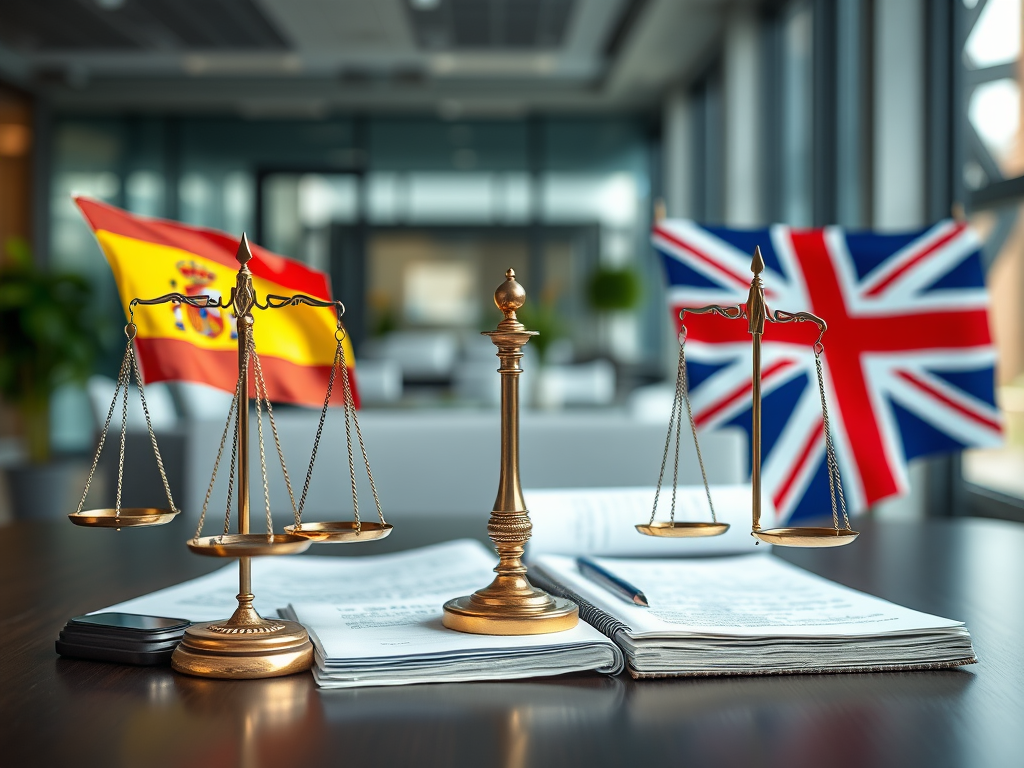
The reach of the Mareva injunction has extended far beyond its English roots. Its success sparked discussions about adopting similar tools in civil law systems, even though those jurisdictions already have traditional provisional measures.
In continental Europe, pre-judgment asset freezes have long been part of the legal arsenal, so the idea of “freezing” assets before judgment was not unfamiliar. In Spain, for example, the embargo preventivo (a precautionary seizure of assets under the Civil Procedure Act) serves the same purpose: securing the defendant’s assets to ensure enforcement of a future judgment.
In legal literature, the freezing injunction is often equated with the embargo or retention measures of civil law.
The requirements for granting an embargo preventivo in Spain — fumus boni iuris, periculum in mora, and a security bond — closely mirror those of a Mareva. Spanish law even permits inaudita parte (without prior notice to the defendant) when urgency or risk justifies it, echoing the ex parte nature of many Mareva applications.
So, what does the Mareva injunction contribute to systems like Spain’s? Rather than introducing a new concept, its influence lies in its scope and execution:
- Global reach: English courts developed the worldwide Mareva injunction to freeze assets globally — something not easily achieved through traditional continental mechanisms.
- In Spain, a judge’s jurisdiction is typically limited to assets within national territory (unless supported by international cooperation).
- The common law’s personal injunction with extraterritorial effects has inspired discussions on how to enhance the effectiveness of cross-border freezing measures within European and international frameworks.
- Judicial cooperation across borders: The Mareva injunction has influenced supranational legislative developments, such as the EU Regulation No. 655/2014, which established the European Account Preservation Order (EAPO).
- This instrument allows creditors to freeze bank accounts across EU Member States through a streamlined and unified procedure, safeguarding cross-border claims.
- While not a full equivalent of the Mareva (as it only targets bank accounts), it shares the urgent, preventive, and cross-border spirit of the Mareva remedy.
- We can observe a clear convergence: civil law adopting more aggressive measures inspired by Mareva’s success, while common law systems created these tools to catch up with civil law safeguards.
- Conceptual diffusion:
- In legal practice, lawyers and judges across Spanish-speaking jurisdictions have become increasingly familiar with the term Mareva injunction in the context of international litigation.
- In commercial arbitrations, for instance, it’s not uncommon to hear references to “getting a Mareva” when there are fears of asset dissipation.
- Even though a Spanish court would issue a formal embargo preventivo, the strategy and ex parte urgency reflect clear Mareva influence. Some Spanish appellate rulings have even referenced Mareva-style reasoning, particularly when cooperating with foreign courts.
A Global Legacy
In short, civil law systems did not need to copy the Mareva injunction because they already had similar instruments.
However, they have certainly taken note of its efficacy, adopting some of its features: speed, surprise, and international scope.
Spain and other continental jurisdictions have reinforced their interim protection mechanisms to ensure no debtor can quietly slip away with the money.
Fifty years after its creation, the Mareva injunction has secured a place in the global toolbox of interim measures, proving that a smart legal invention can transcend traditions and borders.
Has or could a Mareva injunction have changed the outcome of one of your cases?
In an increasingly globalised world, perhaps it’s time to rethink the effectiveness—and the cross-border harmonisation—of interim measures in Europe and beyond.
If you work in international litigation or asset recovery and would like to explore similar mechanisms in your jurisdiction, I’d be glad to exchange views or help assess applicable strategies.
Feel free to get in touch or share your thoughts in the comments.
In the meantime—happy 50th, Mareva Injunction!
 Hector Sbert