Historical Background: Seizure of Cultural Property
The Spanish Civil War (1936–1939) led to significant displacements of artwork and cultural property.
During the conflict, the authorities established the Committee for the Seizure and Protection of Artistic Heritage (Junta de Incautación y Protección del Patrimonio Artístico) to safeguard important cultural items from destruction or theft.
Thousands of paintings, sculptures, and valuables were transferred for safekeeping – for example, around 500 masterpieces from the Prado Museum were evacuated from Madrid.
Efforts were also made, with international collaboration, to protect collections abroad.
Following the end of the war, the Service for the Defense of National Artistic Heritage was created to manage the return of the protected art.
In practice, however, a portion of these cultural assets remained in state institutions, museums, or private hands, and many were never returned to their original owners.
Scholar Arturo Colorado’s research indicates that about 40% of the artworks safeguarded during the war were not restituted. Today, several such works are part of public collections without their provenance having been fully resolved.
In addition to those temporarily secured, some properties were formally confiscated under various legal measures issued during and after the conflict.
For example, institutions such as the Institución Libre de Enseñanza (ILE) saw their assets seized and transferred to public entities.
By the transition to democracy in the late 1970s, these unresolved historical transfers had created a complex legacy of cultural property with contested provenance.
Spain’s Legal Framework for Restitution: The 2022 Democratic Memory Law
In 2022, Spain adopted the Ley 20/2022 de Memoria Democrática (Democratic Memory Law), providing a legal foundation to address historical confiscations of property and cultural assets.
Grounded in principles of reparation and historical recognition, the law explicitly acknowledges the right to reparation for property confiscated on political or ideological grounds.
The law recognizes the right to compensation or restitution for property seized or sanctions imposed for political, religious, or ideological reasons during the Civil War and dictatorship.
It mandates the government to investigate and audit all affected assets within one year, including works of art, documents, valuables, and more.
As part of this mandate, the Ministry of Culture published in June 2024 an inventory of over 5,000 cultural objects believed to have been seized in these circumstances.
The list, available through the CERES heritage database, serves as a starting point for families to identify property and potentially initiate restitution claims.
The Ministry has emphasized that each case will be reviewed individually, taking into account historical records and available documentation.
This legal framework marks a notable shift in Spain’s approach, establishing an institutional pathway for restitution and reinforcing the broader goals of transitional justice.
Its implementation involves collaboration between the Ministry of Culture, the Instituto del Patrimonio Cultural de España (IPCE), and the Ministry of Democratic Memory.
How Victims Can Seek Restitution: Process and Documentation
The current restitution process involves the following steps:
- Consult the Official Inventory: Families and individuals can search the Ministry of Culture’s online database to identify cultural assets associated with their relatives or institutions.
- Document Ownership and Lineage: Claimants must gather documentation such as purchase receipts, family inventories, photographs, wills, or other notarized records to support ownership and prove legal succession.
- Submit a Claim: A formal request must be filed with the Ministry of Culture, including a description of the artwork, historical context, and evidence of ownership.
- Review and Verification: A team of officials, historians, and legal experts evaluates the claim. The State Attorney General’s Office may also provide a legal opinion.
- Resolution and Return: If the claim is approved, the artwork is returned to the claimant. These returns are often marked by public events or acknowledgments.
Public awareness is encouraged, and archival research by institutions such as the IPCE can support families in tracing lost cultural property.
The process can be demanding but represents a historic opportunity to resolve long-standing claims.
Notable Restitution Cases
- Ramón de la Sota Collection (2022): Two portraits originally belonging to the De la Sota family were identified at the Parador de Almagro. With documentation and a favorable legal report, the Ministry of Industry arranged for their restitution.
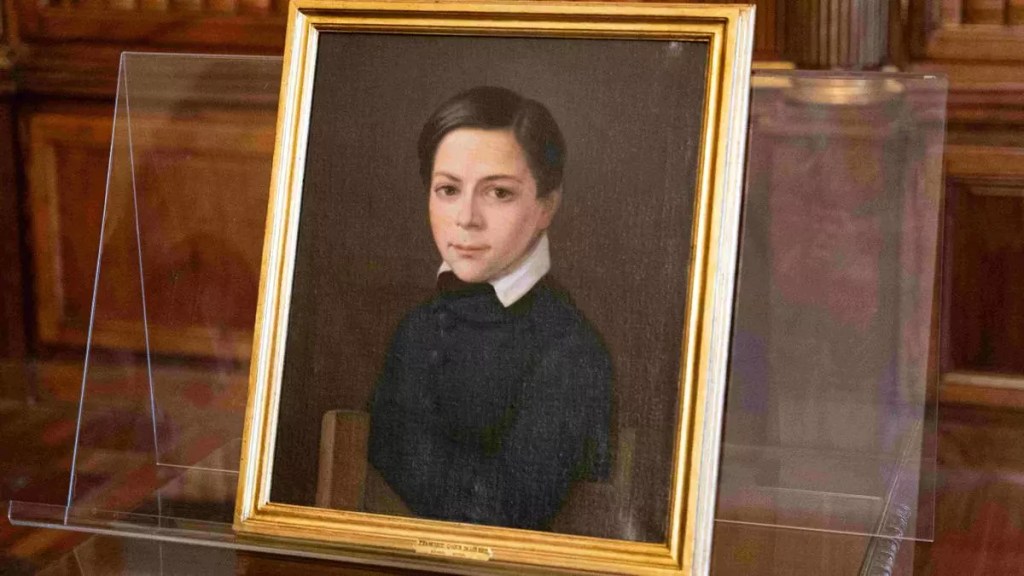
- Francisco Giner de los Ríos Portrait (2024): A painting once belonging to the Institución Libre de Enseñanza was identified at the National Library and returned to the foundation representing the institution.
- Pedro Rico Family Collection (2025): Seven paintings originally safeguarded during the war and later dispersed across state museums were returned to the descendants of Pedro Rico. Additional works are pending restitution.
These examples reflect the Ministry’s effort to coordinate across institutions and apply the new legal standards, while also illustrating the diversity of scenarios—from individual to institutional claims.
Challenges Ahead
Despite progress, restitution efforts face several hurdles:
- Evidentiary Burdens: Documentation may be incomplete or lost, requiring significant archival work.
- Administrative Capacity: Processing claims involves coordination across multiple institutions, which can delay outcomes.
- Public Awareness: Many families are unaware of their rights or the availability of state inventories.
- Legal Complexity: Questions remain regarding compensation when return is not possible, and uniform application of standards is still evolving.
Overcoming these challenges will depend on continued investment in resources, inter-institutional cooperation, and clarity in regulatory procedures.
Comparative Perspective: Restitution in Europe
Other European countries have developed frameworks for addressing similar historical injustices, particularly in relation to art confiscated during the Nazi era:
- Germany: Established the Advisory Commission on Nazi-Looted Art and later created a dedicated Arbitration Court in 2023. Thousands of works have been returned.
- Austria: Passed a specific Art Restitution Law in 1998, with systematic provenance research and a dedicated advisory board.
- The Netherlands: Operates the Restitutions Committee, which applies principles of reasonableness and fairness in evaluating claims.
- France and the UK: Both have created mechanisms to return works and overcome legal obstacles (such as museum inalienability).
Spain’s initiative aligns with broader European efforts, although it addresses a distinct historical period. The emphasis on provenance research, state inventories, and accessible claim procedures reflects shared principles of restorative justice.
Conclusion: A Path Toward Restorative Justice
The restitution of cultural property seized during the Spanish Civil War and subsequent decades represents an important step. It affirms the rights of individuals and institutions to recover lost heritage, strengthens the rule of law, and contributes to public understanding of historical events.
While the path to restitution is complex and evolving, the combination of legal clarity, institutional commitment, and family perseverance is beginning to yield results.
These efforts—mirroring similar processes across Europe—underscore the enduring relevance of provenance, justice, and historical memory in the management of cultural heritage.
 Hector Sbert
6 responses to “The Restitution of Art Confiscated During the Spanish Civil War and its Aftermath: A Step Towards Justice”
Très intéressant, merci Hector! Cela signifie que les restitutions, entre 1982 et 2022, ont été trop difficiles, et qu’il a donc fallu une loi pour cadrer et faciliter ce processus de restitution? Amitiés, Grégoire
LikeLiked by 1 person
Merci beaucoup, Grégoire !
Effectivement, pendant plusieurs décennies, les restitutions sont restées rares et dépendaient souvent de démarches individuelles très complexes. Il manquait un cadre juridique clair, ce qui rendait le processus incertain, parfois même décourageant pour les familles concernées.
La loi de 2022 change cette dynamique : elle reconnaît expressément le droit à la restitution et impose à l’État l’obligation d’identifier les œuvres concernées et de faciliter les démarches. C’est donc un véritable tournant.
Amitiés,
Héctor
LikeLiked by 1 person
Hector, thank you for sharing this piece. Very interesting! A great short read and a fascinating (and encouraging) insight into this important Spanish cultural legacy. See you soon my friend! Craig
LikeLike
Thanks so much, Craig. It’s a subject that combines legal nuance with historical depth, and I’m glad it resonated.
LikeLike
Very interesting and informative on this period which remains an open wound in the history of Spain. Thanks Hector.
LikeLike
Thank you, Alexandre — I truly appreciate your comment. It’s a complex chapter, and I’m glad the piece was of interest.
LikeLike